
Richard Beeson on Four Decades of Industrial Data
Former OSIsoft CTO Richard Beeson on four decades of industrial data: the Hawaii story behind PI, what Asset Framework was really for, and why AI could bring the next spreadsheet hell to OT.
The IT/OT Insider Archive
The full podcast and video archive of The IT/OT Insider — talks, interviews, and explainers on all things IT+OT!
Former OSIsoft CTO Richard Beeson on four decades of industrial data: the Hawaii story behind PI, what Asset Framework was really for, and why AI could bring the next spreadsheet hell to OT.
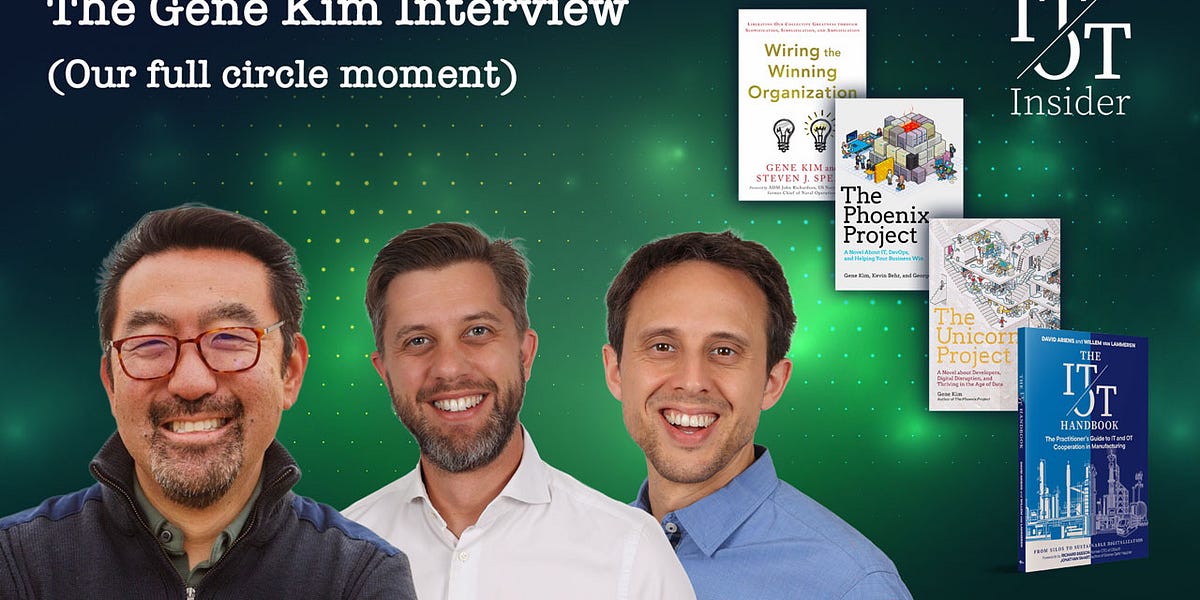
Gene Kim wrote a novel about IT set in a factory. We wrote a book about factories shaped by ideas from IT. In this long overdue episode we finally compared notes!

David Ariens and Willem van Lammeren discuss what it takes to bridge IT and OT in manufacturing, covering practical frameworks, organizational culture, data architecture, and cooperation patterns for scaling digital transformation beyond initial pilots.

Episode 58 of Unplugged: an IIoT Podcast. Host Phil Seboa talks with David Ariens (Analytics For Industry / AVEVA) and Willem van Lammeren (Syensqo) about why IT/OT convergence projects fail, the cultural and technical silos separating IT and OT teams, and what makes convergence efforts succeed in practice.

Everyone's being sold the same dream: lights-out plants, humanoid robots, AI that sees and understands everything on the shop floor. David and Willem take a hard look at how close manufacturing actually is to that dream, and where the real, usable AI opportunity is hiding today. In this episode: -Why lights-out plants exist, and why most brownfield sites can't just copy them - The data nobody's touched yet: manuals, shift reports, maintenance notes, P&IDs, and the knowledge only your engineers carry around in their heads - Why "autonomous investigation" (AI that helps engineers dig into a problem fast) is a far more realistic first step than "autonomous control" - What it actually takes to get there, technologically and organisationally

David Ariens and Willem van Lammeren introduce The IT/OT Handbook on stage, explaining the three-step framework and the two years of research and practitioner interviews behind the book's approach to bridging IT and OT in industrial organizations.
Infrastructure convergence made it possible for IT and OT to share a network — and then made it necessary for them to share responsibility for what runs on it. Cybersecurity convergence made it possible to attack both sides of the business at once — and then made it necessary to stop treating IT and OT security as separate disciplines. Data and AI convergence is making it possible to build one data foundation across both worlds — and it will make it necessary to figure out, organisationally, who's accountable for it. That's really the answer to "what is IT/OT convergence": it's not a single project you finish, and it's not primarily a technology purchase. It's an ongoing pattern of two technical worlds discovering, wave after wave, that they need each other more than either side originally expected.
Bob van de Kuilen joins us to explain why knowledge graphs are what let machines (and people) actually reason about a factory, and why the best ontologies are discovered.

Litmus CEO Vatsal Shah on the shift from platform-first to outcome-first thinking, why an industrial data catalog is the missing piece for AI, and why "stop buying tools" is coming for all of us!
IIoT platforms are hiding in plain sight: in elevators, wind turbines, and even medical devices. It's time we talked about what they are and why AI makes the underlying data architecture important!
Andreas Vogler, Chief Innovation Officer at ETM, didn't set out to build a product, he set out to understand MQTT as deeply as possible, and MonsterMQ is what happened next.
CESMII's i3X is a new common API specification for manufacturing data platforms. In this new episode we sat down with John Dyck, CEO, and Jonathan Wise, Chief Technology Architect.

Kevin Jones from dataPARC walks us through 40+ years of industrial historians and shares the unforgettable “black paper” story that explains why operator buy-in still beats every architecture diagram.

HighByte’s CTO Aron Semle returns to talk about what’s changed (and what hasn’t) in Industrial DataOps, and why MCP, agents and vibe-coded factory apps are here to stay.

David Ariens is interviewed at the AVEVA PI DI Roadshow in Frankfurt.

A special David & Willem episode — no guest, just us, a living room, and three years of IT/OT stories.

A deeper look at what's really holding back the Virtual Operator — and why there is no silver bullet (yet).

We talk a lot about data platforms, AI, and digital twins on this blog. But all of that sits on top of a process automation layer that most people take for granted — and that layer is quietly eroding.
A deeper dive into our conversation with Wybren van der Meer on the unglamorous work that makes scaling possible

In this video, David Ariens explores the concept of Unified Namespace (UNS) and its significance in addressing the challenges of data management in industrial settings. He discusses the common issues of data spaghetti, the importance of understanding business problems over technology solutions, and the role of data management in creating digital representations. The conversation also touches on the Industrial Data Platform, the misconceptions surrounding UNS, and the necessity of IT-OT cooperation and data governance.
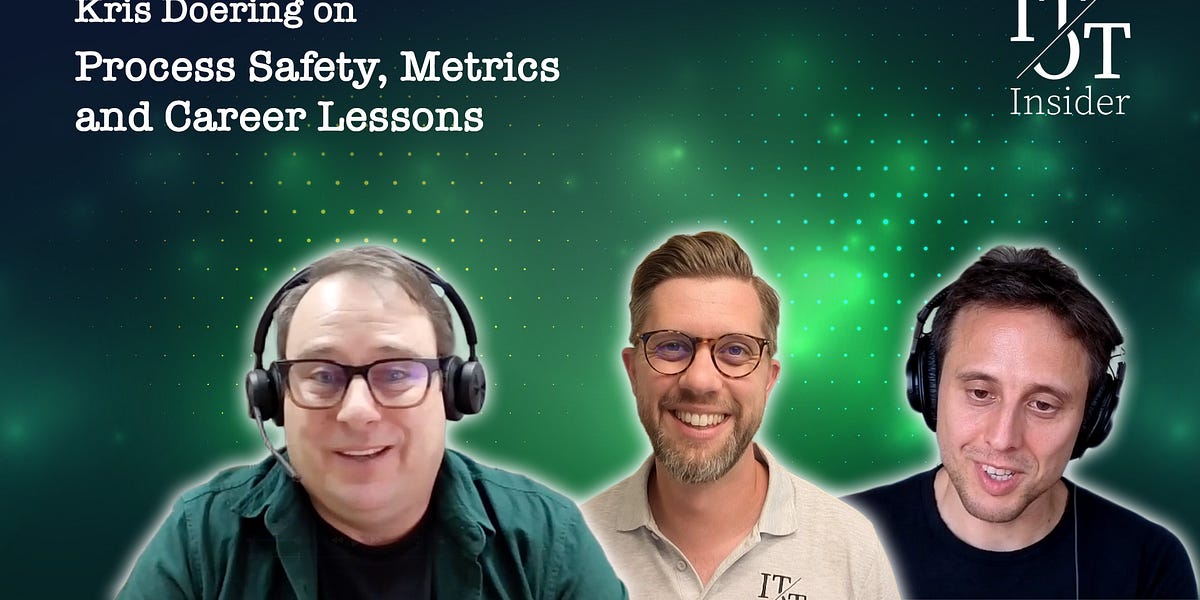
Kris shares his journey across refineries, postal services, and gas transportation—revealing how data connects it all and why making metrics visible at the front line matters more than most realize.